
The Game That Makes Non-JRPG Players Forget They're Playing a JRPG
There's a conversation that happens a lot in gaming spaces. Someone says, "I don't really do JRPGs — they're too long, too anime, too menu-heavy." And then, somehow, that same person ends up putting 120 hours into Persona 5 Royal and telling anyone who'll listen that it was over too soon.
That's not a coincidence. Persona 5 Royal doesn't lower the bar for the genre — it makes every single thing about the genre feel so compelling that you stop noticing there's a bar at all. The sprawling cast, the time management, the turn-based dungeons, the social simulation layer — in most games these would be obligations. Here they're the reason you stay up until 2 a.m. telling yourself "just one more day."
Let's break down why.
The Phantom Thieves: Character Writing That Sets the Standard
The protagonist — known by default as Joker, a transfer student falsely convicted and on probation — is, by design, something of a blank canvas. The real stars are the Phantom Thieves surrounding him: Ryuji, Ann, Yusuke, Makoto, Futaba, Haru, and Morgana. Each of them arrives with baggage, a wound, a worldview. And the game earns the right to put them through the wringer because it takes the time to make you care.
The Confidant system is the engine of that care. Spend time with a character outside the Metaverse — over coffee, studying together, watching a movie — and your relationship deepens, unlocking new story beats and combat bonuses at each rank. But calling it a "relationship mechanic" undersells it. The Confidant events are essentially self-contained character dramas. Makoto's arc is about the weight of responsibility and learning when to act for yourself. Futaba's is about grief, agoraphobia, and rebuilding trust in the world. Yusuke's is about the tortured authenticity of a working artist.
By the time you finish the game, these characters don't feel fictional. That's a rare thing.
The Gameplay Loop: Managing Two Worlds at Once
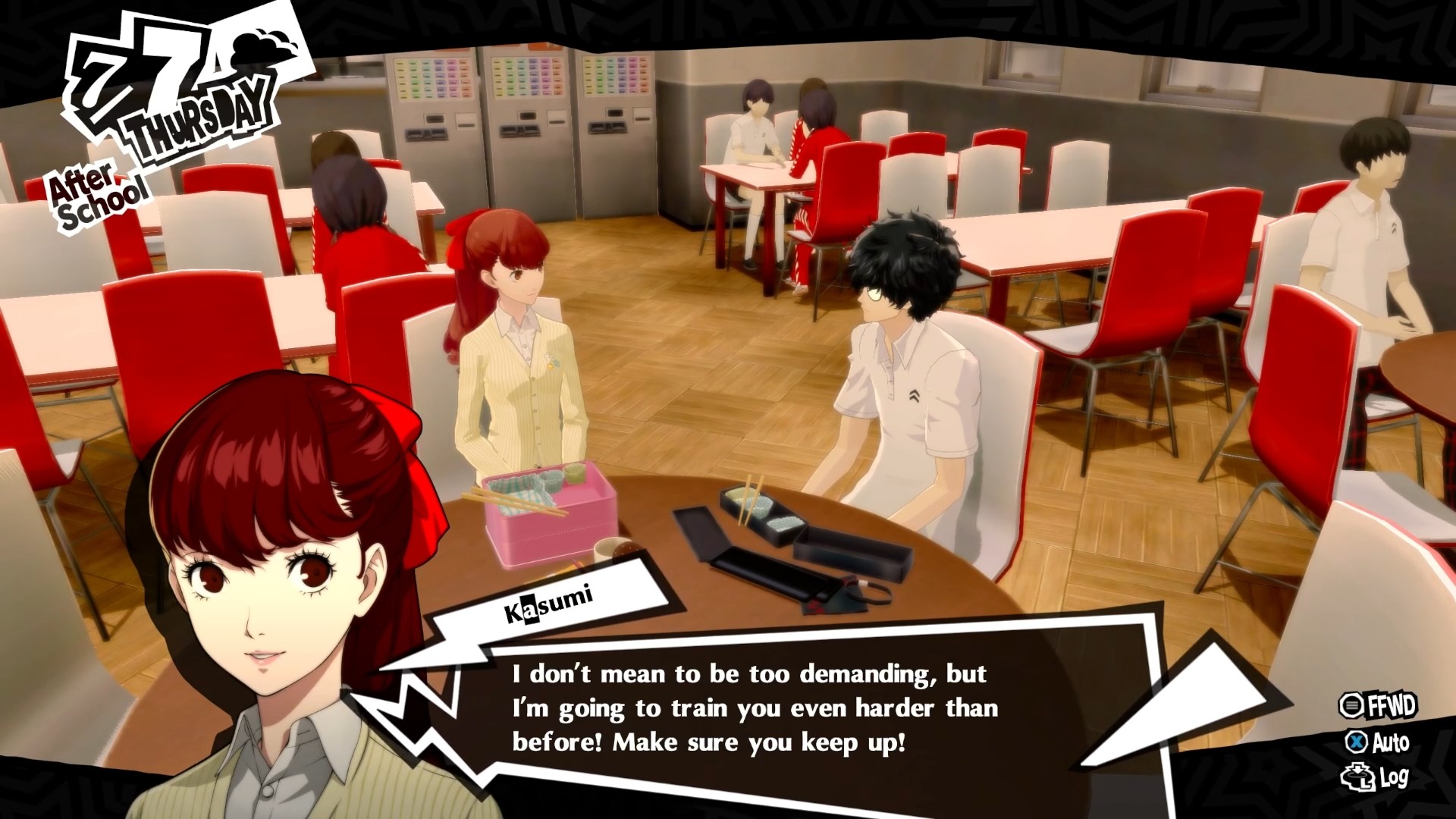
Persona 5 Royal runs on two parallel tracks, and the tension between them is where the game lives.
The Metaverse Palaces are the supernatural manifestations of corrupt adults' twisted desires. A tyrannical PE teacher's Palace is a medieval castle where students are slaves. A plagiarist art dealer's Palace is a museum where he hoards stolen masterpieces. Each Palace has its own visual theme, puzzle logic, stealth sections, and boss encounter. The Phantom Thieves infiltrate these spaces to steal their target's "Treasure" — the source of their distorted desire — and trigger a change of heart.
Real-world Tokyo is where you spend the other half of your time: going to school, working part-time jobs, hitting the batting cages in Yongen-Jaya, cramming for exams, or spending an evening with a Confidant. Every in-game day is a resource. You can't do everything in a single run, so you're constantly making small decisions about where your time goes — and those decisions accumulate into a playthrough that genuinely feels like yours.
The genius is in how the two systems feed each other. You need Confidants leveled to unlock better combat abilities. You need those abilities to clear Palaces efficiently. Clearing Palaces quickly means you have more free days for Confidants. The game doesn't manage your time — it gives you a world where you want to manage it yourself.
Combat: Turn-Based With an Attitude Problem
If you've written off turn-based combat as "slow" or "passive," Persona 5 Royal will change your mind. This battle system has opinions, and it delivers them with a style that no other JRPG comes close to matching.
The Press Turn (One More) system is the mechanical core. Hit an enemy's weakness or land a critical hit and you earn a bonus action — a "One More." If all party members down enemies through weakness hits or crits in the same turn, the Phantom Thieves enter a Hold Up, letting you demand money, items, ask an enemy to join your team, or unleash an All-Out Attack — a chaotic pile-on that deals massive damage and ends with a stylized splash screen.
The flipside: getting your weakness exploited means losing a turn. Which means every fight asks you to think about elemental coverage, enemy types, and action sequencing. A boss encounter at full gear feels like a puzzle you already know the answer to. An encounter where you're ambushed or underprepared feels like a tense negotiation.
Baton Pass lets you transfer your One More action to another party member mid-combo, with escalating attack and defense bonuses for each pass. Chaining a full-party baton pass while hitting weaknesses feels incredible — that rhythm game quality is absolutely real.
And then there's Persona fusion: as the wild card, Joker can hold multiple Personas and fuse them in the Velvet Room to create stronger ones, inheriting and customizing skills along the way. It's a build optimization system wearing a tarot card costume, and it's completely absorbing.
The Royal Additions: What Changed, and Why It Matters
The original Persona 5 (2016 in Japan, 2017 globally) was already extraordinary. Royal isn't a director's cut in the tired sense — it's a genuine expansion of the experience.
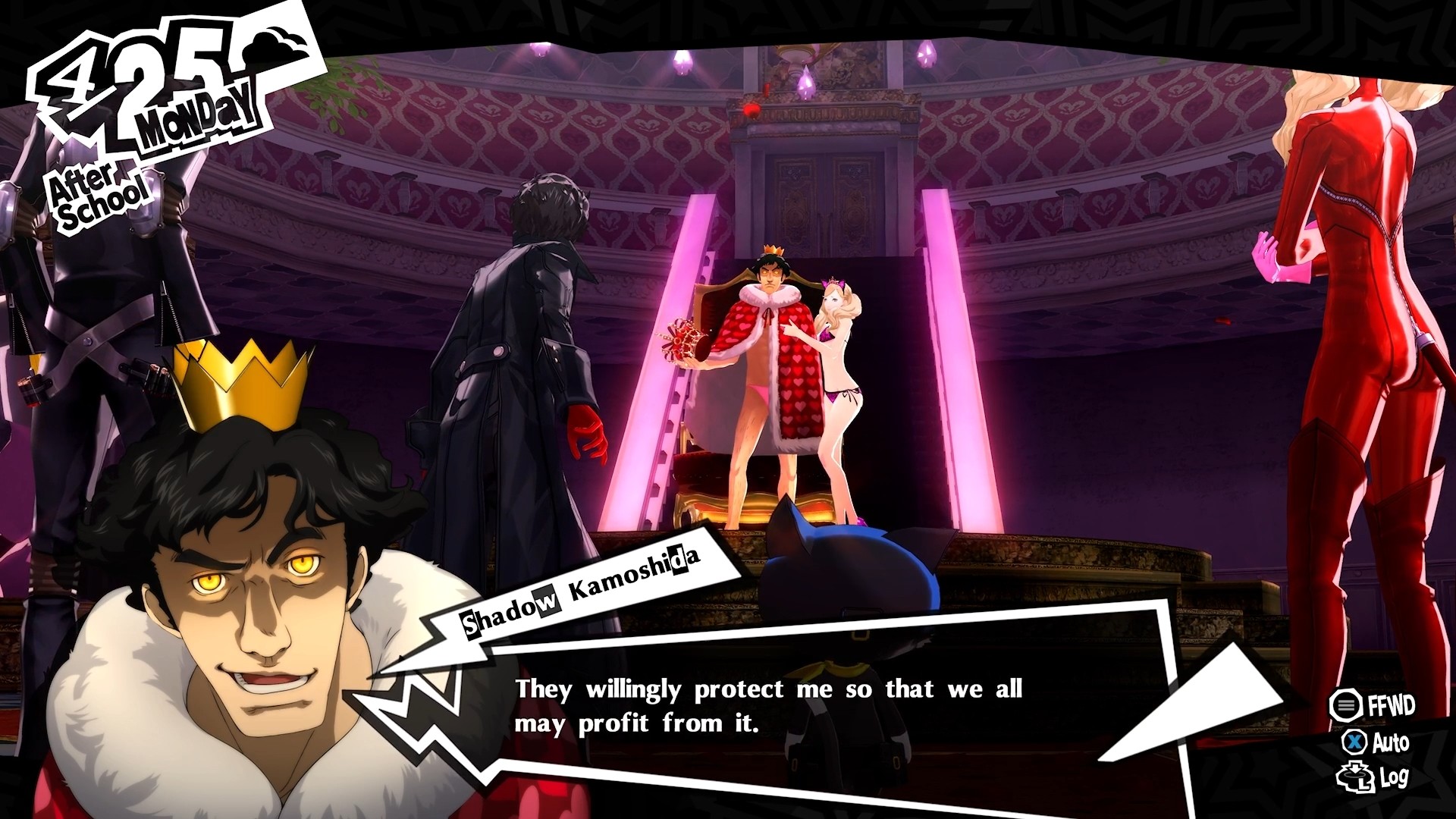
Kasumi Yoshizawa is the most visible addition: a new party member and Confidant who joins early and whose arc runs parallel to the main story. She's a gymnast, an elite transfer student, and someone carrying a very specific kind of grief. Kasumi's Confidant story is one of the game's best, and her presence reshapes the feel of the third semester in ways that retroactively recolor what came before.
The Third Semester is the big one. The original game had two semesters. Royal adds a completely new third semester — a new Palace, a new antagonist, new lore, and a conclusion that diverges significantly from the base game's ending. Without spoiling anything: the third semester forces the Phantom Thieves to confront a question about happiness and reality that the first two semesters only hinted at. It's 10–15 additional hours that earn their place.
Mementos Rework: The original game's randomized dungeon, Mementos, was serviceable but repetitive. Royal adds new layers to it — most notably through the Mementos Memo, a series of side requests tied to Morgana and accessible through a new character. These requests aren't optional filler — they're narratively connected, and completing them changes how the Mementos endgame unfolds.
If you've never played either version: play Royal. If you've played the original: Royal's additions are substantial enough to replay for.
Style and Aesthetics
: A Game That Knows It's Art
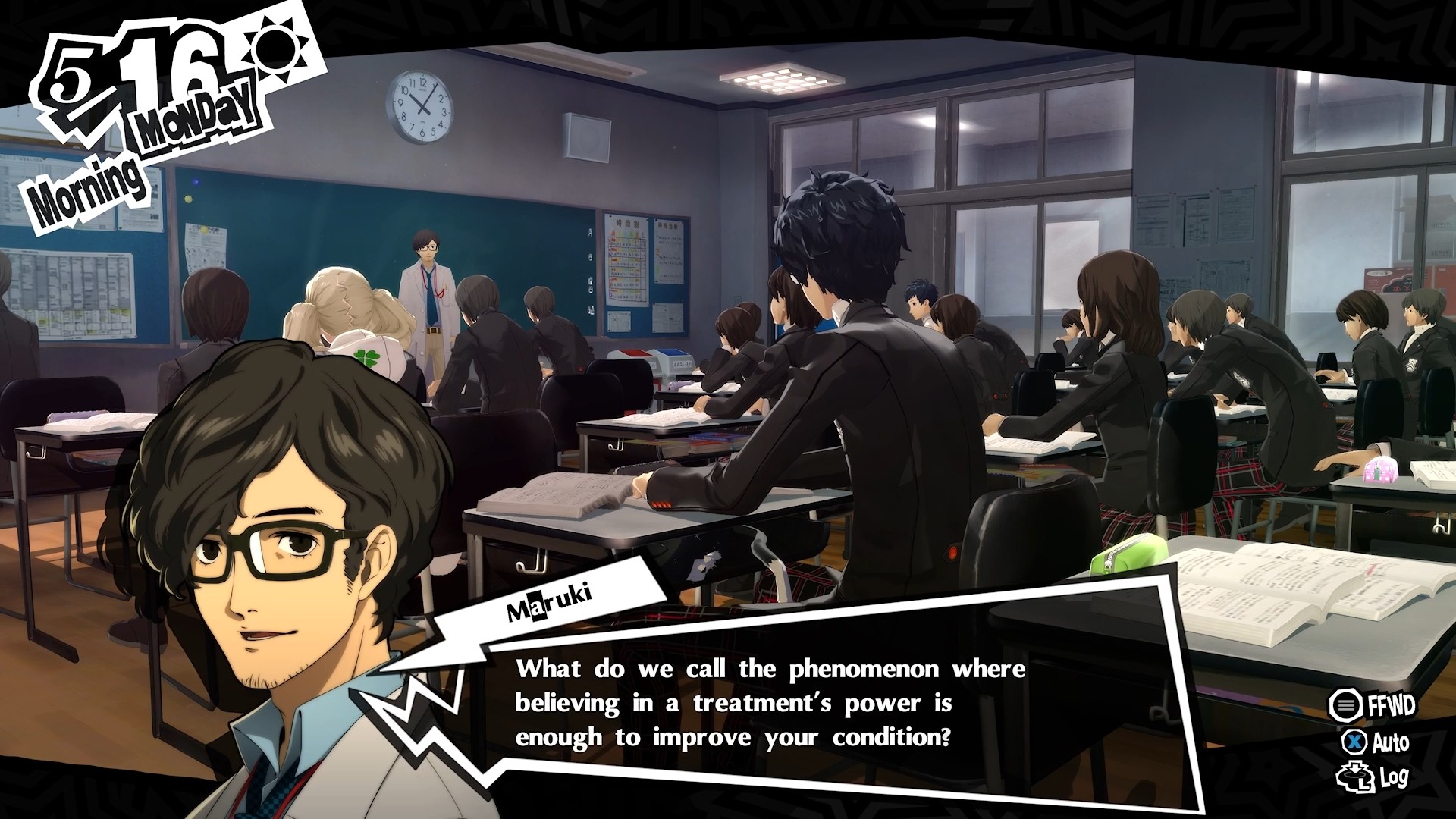
At some point during Persona 5 Royal, you will catch yourself admiring the UI. Opening the menu. Transitioning into combat. Watching a level-up notification slide in. All of it — the red and black color palette, the kinetic typography, the animated transitions, the irreverent card-shuffle style of everything — is designed with a coherence and confidence that most games never approach.
This is a 2016 game that still looks unlike anything released in 2026. It's not technically impressive by contemporary standards. It's aesthetically distinctive in a way that technical power can't buy.
The music requires its own mention. Shoji Meguro's soundtrack for Persona 5 is one of the most discussed, most streamed, most universally praised game soundtracks ever made — a blend of jazz, hip-hop, J-pop, and hard rock that shouldn't cohere and completely does. "Last Surprise" opens every random battle and never gets old. "Rivers in the Desert" is the boss fight track that defines what a boss fight track can be. "Life Will Change" announces the third act in a way that sends chills regardless of how many times you've heard it.
The soundtrack on its own is worth the price of the game. That the game around it is extraordinary makes it a bonus.
Tips: What to Know Before You Start
Persona 5 Royal rewards investment and punishes neglect of certain systems. Here's what will save you a headache:
- ▶Do not ignore Confidants. The temptation is to grind Palaces and leave social time for "later." Resist it. Confidant ranks unlock combat abilities that directly affect how fights feel. You cannot max everything in one run — pick your priorities early and commit.
- ▶Makoto and Futaba are must-raises. Makoto's Confidant gives increasingly useful SP regeneration and emergency assistance abilities that make dungeon exploration dramatically more sustainable. Futaba's is required for a mandatory main-story Palace but her post-Palace Confidant story is one of the game's emotional peaks. Raise both.
- ▶Check the Mementos Memo. Every time a new section of Mementos opens up, Morgana's Mementos Memo updates with new side requests. Many of these are tied to named characters whose Confidants you've been developing — they're worth doing, and some affect the third semester.
- ▶Don't be proud about difficulty. Persona 5 Royal's pleasures are its story, characters, and aesthetics. If an encounter is blocking your progress and wrecking your enjoyment, drop to Easy. The Merciless run is there for the second playthrough.
- ▶Before the final Palace: bank everything. Confidants, stat upgrades, Mementos requests — finish as much as possible before committing to the endgame sequence. The third semester locks off free-time options in ways that will hurt if you weren't prepared.
JRPG Newcomer vs. Veteran: Why Both Audiences Love It
If you're new to the genre: Persona 5 Royal is the single best argument for why JRPGs are worth your time. It takes every element that puts newcomers off — the length, the anime aesthetics, the systems-heavy structure — and makes each one feel like a feature rather than a cost. You'll finish it and understand, on a bone-deep level, why people dedicate themselves to this genre.
If you're a veteran: The Confidant system is deeper than it looks, Persona fusion gives you combinatorial build depth that rewards serious min-maxing, and New Game Plus opens options — including Merciless difficulty — that give the combat real bite. Replay value is high. The third semester may give you moments you haven't had from a JRPG in years.
The overlap between both groups: the certainty, after finishing, that this is one of the games you'll still be thinking about years later. That's not a genre thing — that's just what it means to play something genuinely excellent.
Verdict: One of the Best 100-Hour Games Ever Made
Persona 5 Royal is a complete work of art. Story, characters, combat, music, visual design — every element operates under the same coherent vision, and that coherence never breaks. A hundred hours pass, and not a single moment feels like filler. When it ends, the reaction most players describe isn't satisfaction — it's the specific ache of wishing there were more.
For newcomers to the genre and veterans alike, this is the recommendation without caveats. Don't wait for a sale. Start now.
GamePeak Rating: ★★★★★ — Essential