# Monster Hunter Wilds at 15 Months — Is It Still Worth Playing?
February 28, 2025. Monster Hunter Wilds launched and, almost immediately, conversation shifted from anticipation to something closer to awe. A Metacritic score of 91 put it among the highest-rated entries in a franchise with decades of history. Critics and players reached for the same words: "best in the series," "a new benchmark."
Fifteen months have passed since then. The launch excitement has settled. The discourse has moved on. For anyone who didn't jump in during that initial wave — or who is only now discovering the series — the question is different now. Not "is this worth the hype?" but something more practical: is this game worth your time and money in May 2026?
The short answer is yes. Here's the longer version.
Game Info
| Detail | Info |
|---|---|
| Developer | Capcom |
| Publisher | Capcom |
| Release Date | February 28, 2025 |
| Platforms | PC (Steam), PS5, Xbox Series X|S |
| Price | ~$59.99 |
| Metacritic | 91 |
| Genre | Action RPG |
| Steam | Buy Here |
What Makes Wilds Special
The Monster Hunter formula has been refined across twenty years, but Wilds represents one of the series' most substantive expansions of that formula rather than simply a refinement.
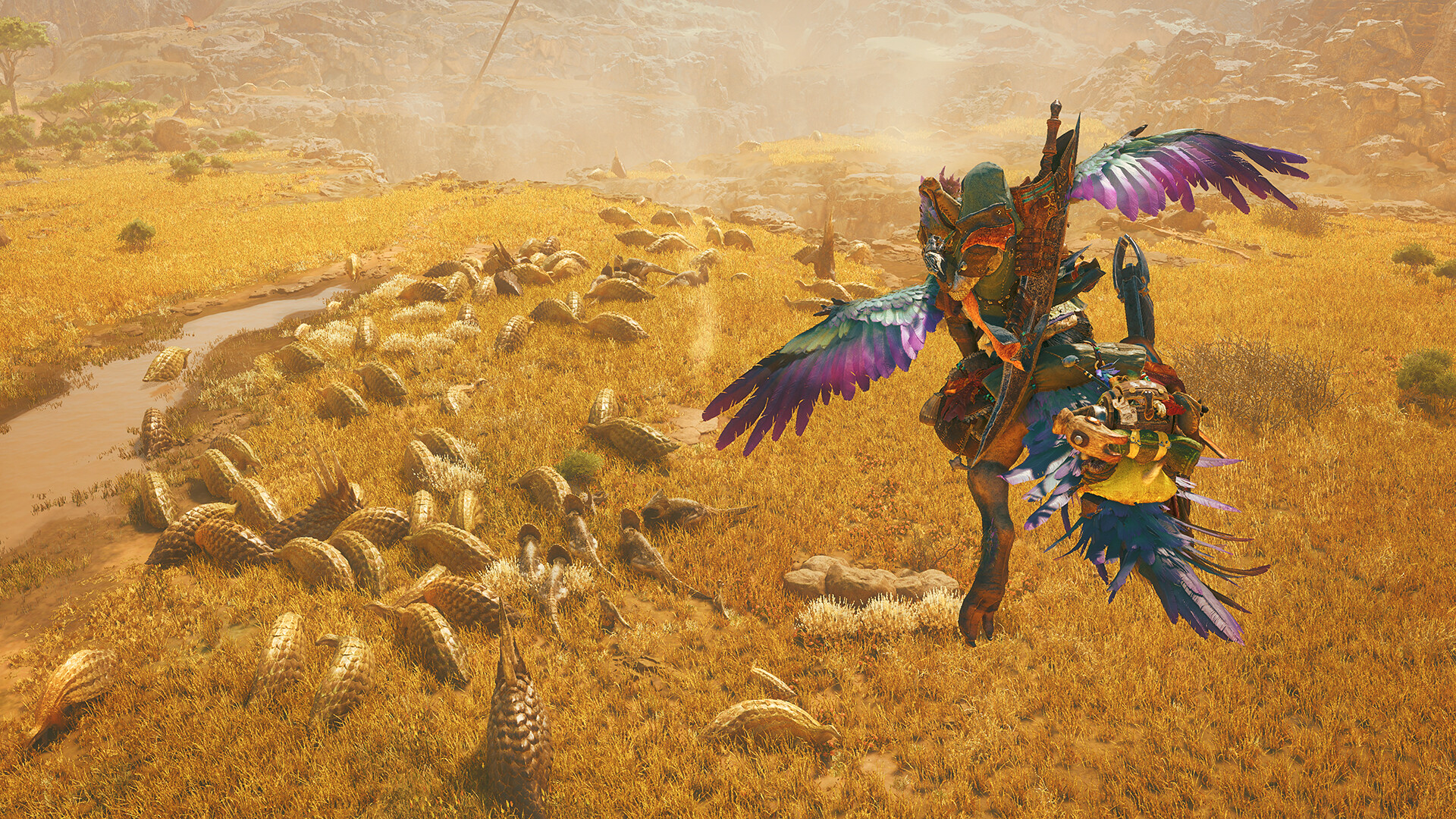
The headline feature is the living ecosystem. Previous games divided hunting grounds into discrete zones; Wilds builds something that functions more like an actual environment. Monsters eat each other. Weather systems change the landscape and the behavior of every creature in it. A pack of smaller creatures might scatter when an apex predator enters their territory. You're not just tracking a target — you're reading an ecology and deciding when and how to intervene.
This creates emergent moments that feel genuinely unscripted. Positioning yourself downwind as two large monsters clash, waiting for the right second to strike the wounded winner — these aren't scripted events. They're the byproduct of interlocking systems doing what they were designed to do.
Combat, meanwhile, retains everything that makes Monster Hunter work. Fourteen weapon types, each with its own movement language and skill ceiling, all of them viable. The loop of hunting, crafting better gear from the materials you've earned, then returning to tackle harder prey remains one of the most satisfying reward structures in the genre. It's the kind of game that asks for more than a few hours before it reveals its full depth.
The State of the Game After Post-Launch Updates
This is where the "15 months later" framing becomes genuinely useful. Wilds at launch was excellent. Wilds as of mid-2026 is more complete.
Capcom has delivered multiple Title Updates since launch, each adding new monsters, new gear sets, event quests, and endgame content. The most notable criticism leveled at the game in the weeks after launch — that the endgame felt thin relative to the campaign — has been substantially addressed. The current version of the game contains significantly more to do at the high end than launch-day players had access to.
For a player starting today, that's genuinely good news. You'll go through the same story and progression arc everyone else did, but by the time you reach the endgame content, there will be more of it waiting for you than there was for the first wave of players. Coming late to a live game is usually a disadvantage. Here it's almost an advantage.
📸 Screenshots
Is the Multiplayer Community Still Active?
This question matters a lot in Monster Hunter, where co-op has been central to the experience since the series' earliest days. Wilds launched to enormous numbers — Steam concurrent player figures that placed it among the platform's biggest launches ever. The realistic concern for a late joiner is whether that player pool has eroded to the point where finding hunts becomes difficult.
It hasn't. The community remains large and active across all platforms. Each new Title Update reliably brings a wave of returning players, which keeps the population refreshed rather than slowly declining. There is no shortage of hunters to join or help you. The community has also had 15 months to build out resources — guides, weapon tier lists, build databases, Discord servers — that make the game considerably easier to navigate as a newcomer than it was at launch when everyone was figuring things out in real time.
For Newcomers vs. Returning Hunters
If you've never played a Monster Hunter game, Wilds is the best entry point the series has ever had. The tutorial is more patient and explanatory than previous entries, the opening hours ramp up gradually, and the UI has been made considerably more legible. You don't need any knowledge of prior games to follow the story or understand what's happening. The franchise has always had a reputation for a steep learning curve; Wilds steepens it much more gently than its predecessors.
If you're a returning player from World, Iceborne, or Rise, the transition is seamless and the game will feel immediately familiar while also offering genuinely new things to engage with. The ecosystem systems and expanded combat options give experienced hunters fresh ground to explore. One honest caveat: players who have sunk hundreds of hours into Iceborne in particular may find the first few hours of Wilds' story paced more slowly than they'd like. Stick with it — the pace builds, and the later hunts are where everything opens up.
Should You Buy It Now? A Clear Recommendation
Monster Hunter Wilds at 15 months is a better game than it was at launch, available to a larger pool of players, supported by a healthy community, and still receiving developer attention. A Metacritic score of 91 doesn't expire — the quality of the game itself hasn't diminished.
Buy it if:
- ▶Action RPGs with deep gear progression are your genre
- ▶You want something with a high skill ceiling that rewards sustained investment
- ▶You're looking for a game that supports both solo and cooperative play equally well
- ▶You bounced off earlier Monster Hunter games and want to try again with the most accessible entry yet
- ▶You were put off by PC performance issues at launch — patches have substantially improved stability
Hold off if:
- ▶You're primarily a story-driven single-player player with no interest in repetitive endgame farming
- ▶You're waiting to see if a major expansion (à la Iceborne) gets announced before committing
- ▶You're hoping the Summer Sale brings a price reduction (also a reasonable strategy)
Fifteen months after launch, Monster Hunter Wilds remains one of the best action RPGs available on any platform. The gaps that critics noted at release have been filled in; the community is still there. If you've been waiting for a signal that now is a good time to start — this is that signal.